


Hello Nesting friends! I’m Amy C from from this heArt of mine, a blog about good food, a creative home and loving my family.

I am excited to be a part of Delia’s nesting series. The projects so far have been so neat, don’t you think? I’m excited for more to come.
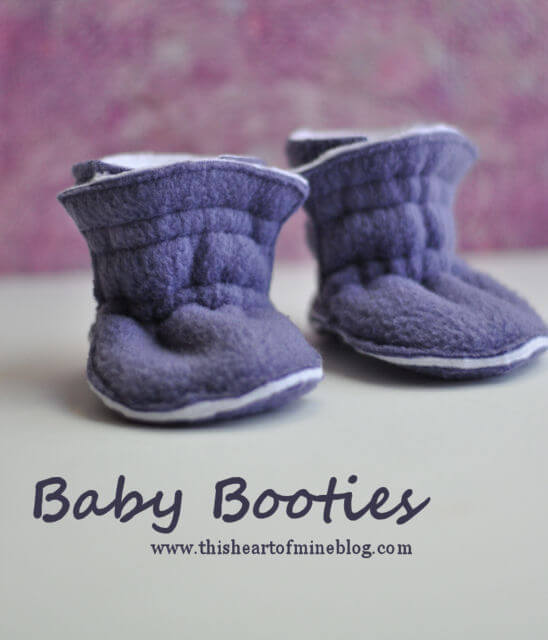
Today, I’m sharing This project came from necessity to keep the cute toes of my 8-month-old son warm during the winter months of Minnesota. Baby socks weren’t cutting it. You see, my son, Sweet J, has cankles. Very cute, very fluffy cankles. (For those who aren’t familiar, cankles is the term given when calves seamlessly blend into the foot, without a noticeable taper for the ankle.) Cankles and baby socks make for a frustrating pair. The socks did not stay up and they did not not stay on which led to a few lost socks. After lots of trial and error, I came up with a pattern that worked. These booties are easy to put on, they stay on his feet and cankles and, most importantly, they keep his toes warm. 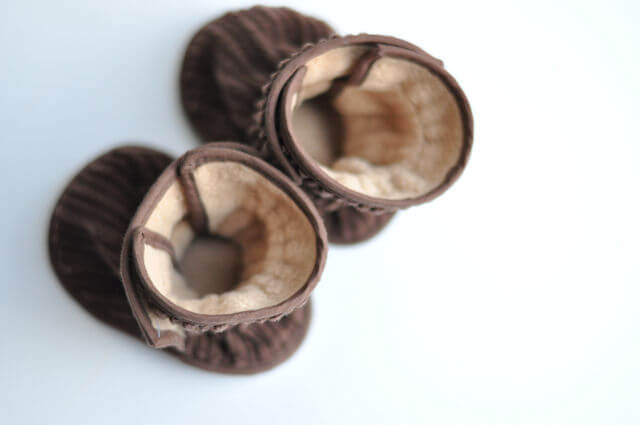 The pattern is fairly simple so excuse my over-explaining. I’m not what you would call a natural seamstress like most of the rest of these ladies. I love doing it but I really have to think. 🙂 Are you interested in making some yourself? Then you’re in luck, there’s a link at the end of the post for a free download of my pattern. These booties don’t require much, especially if you’re making wee little booties.

- Fabric – One fabric or two coordinating fabrics. A quarter of a yard is plenty for most sizes.
Couple of things about fabric:Fleece is the easiest to work with (and warmest) because it doesn’t need to be hemmed however, if you are willing to add bias tape, any woven fabric will work too, like the corduroy ones above.Take care to note the word “stretch” and coordinating arrows on the pattern piece and place on your fabric accordingly.
- Elastic – I used 3/8 inch elastic in my son’s booties and 1/2 inch elastic for the smaller ones. Fit to your baby.
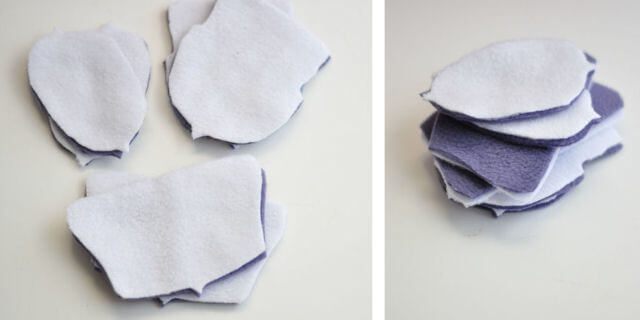
To begin, cut out the pattern pieces. Because there is an inner and outer fabric, I found it easiest to fold the fleece which enabled me to cut out two pieces at once. Excuse the prototype pattern pieces.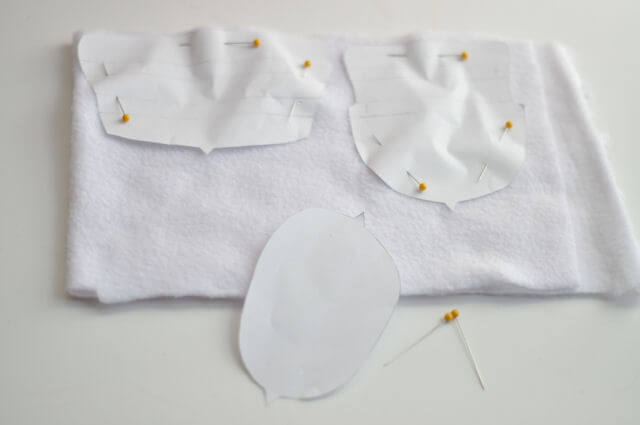 I did this for both colors.
 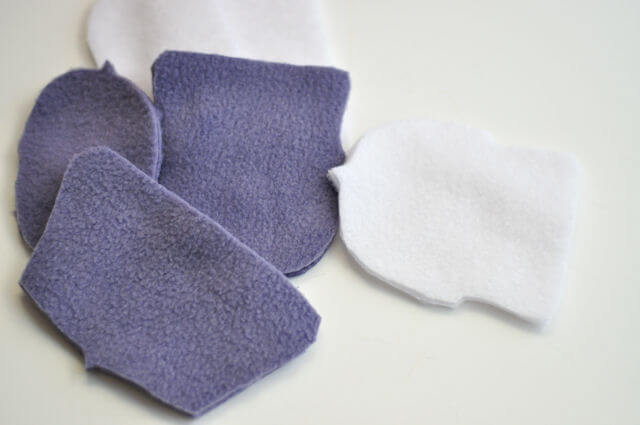 Match up all the pieces, putting the wrong sides together. To make a pair of booties, there should be two of each part and with each part, there should be an inside and outside piece.
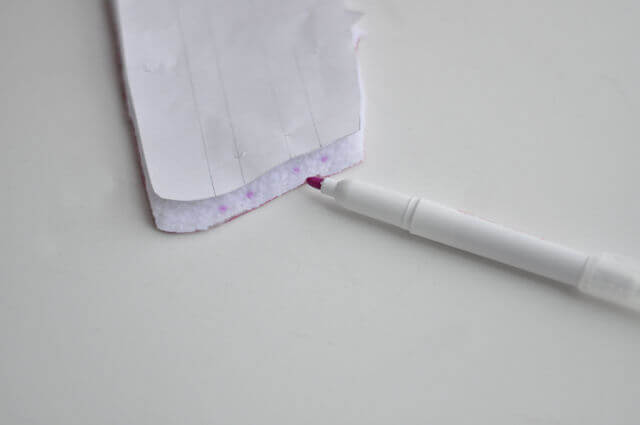
  Using the pattern, mark where the elastic channels go.
  Connect the dots and sew the elastic channel lines on both the FRONT and BACK pattern parts. There are two channels on each.
 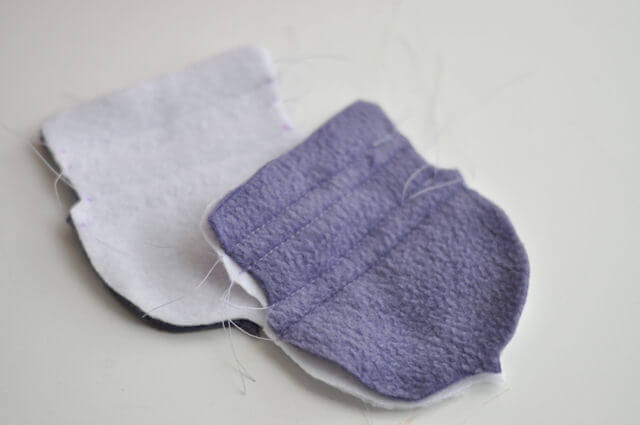 Once the elastic channels are sewn, sew around the top of the FRONT piece, using your presser foot as your inseam distance.
 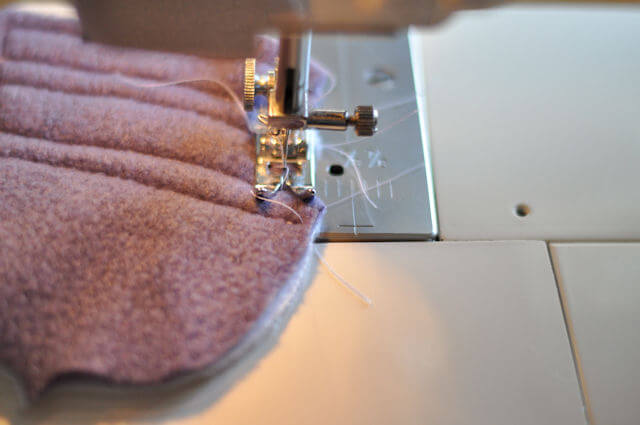 This is what the top section of the FRONT piece looks like sewn. Notice the bottom half-circle is not sewn.
 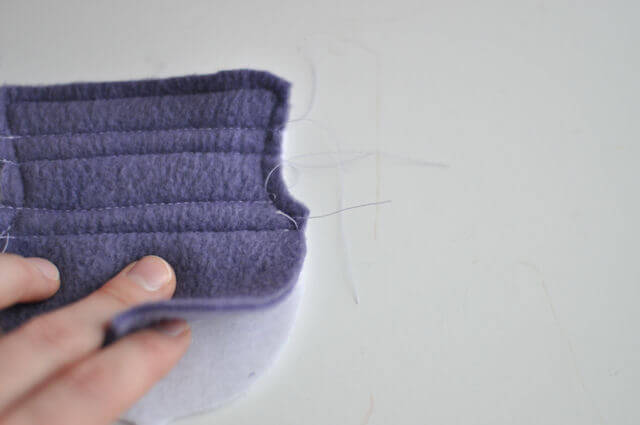 Here is a picture of the BACK piece with the elastic channels and top part sewn.
 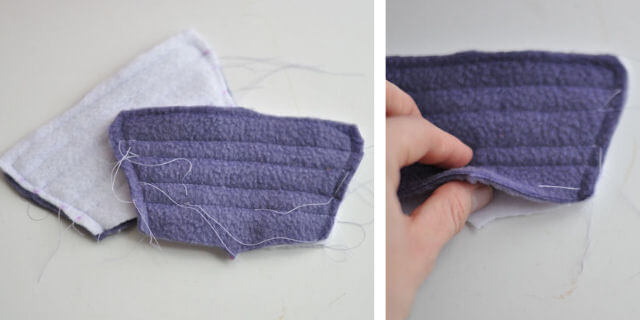 With both FRONT pieces and both BACK pieces prepared, begin constructing the bootie. Match up the “1” notch on the BACK piece and the “1” notch on the SOLE piece and secure with a pin.
 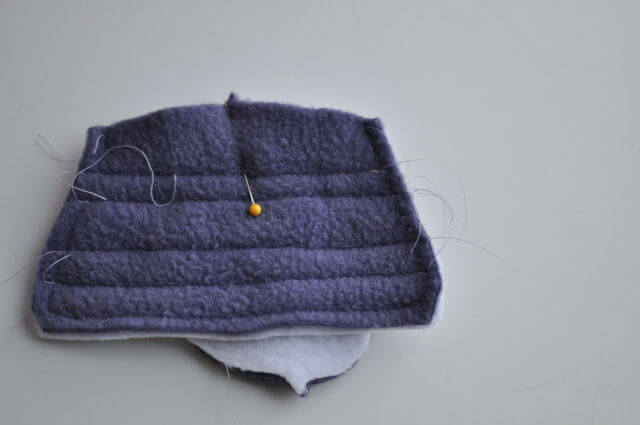 Once the notches are matched up, bring either side of the BACK piece to meet the SOLE piece and secure with pins. Sew, again, using the presser foot as the inseam guide. Trim just the BACK piece, cutting it close and evenly around the stitching.
 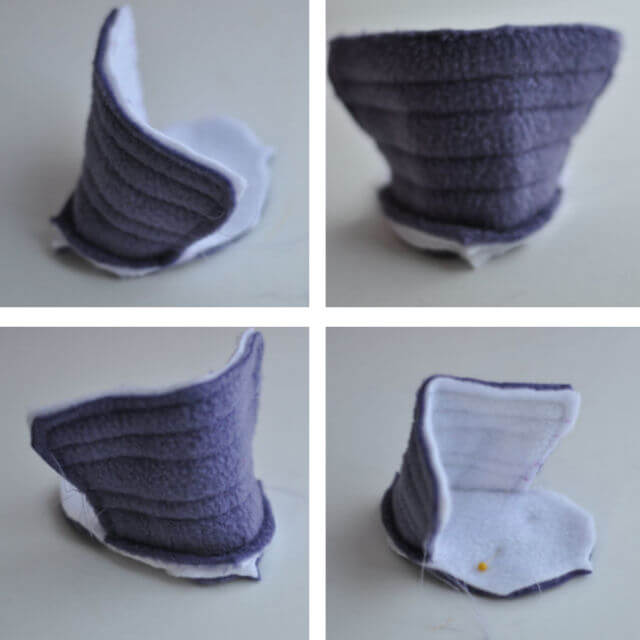 Next, take the FRONT piece and match up the “2” notch with the “2” notch on the SOLE piece. Pin in place.
 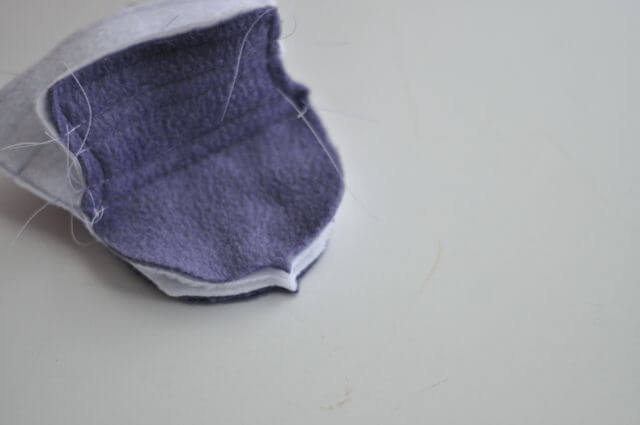 Again, match up the rest of the FRONT piece with the SOLE piece. The FRONT piece will overlap the BACK piece.
 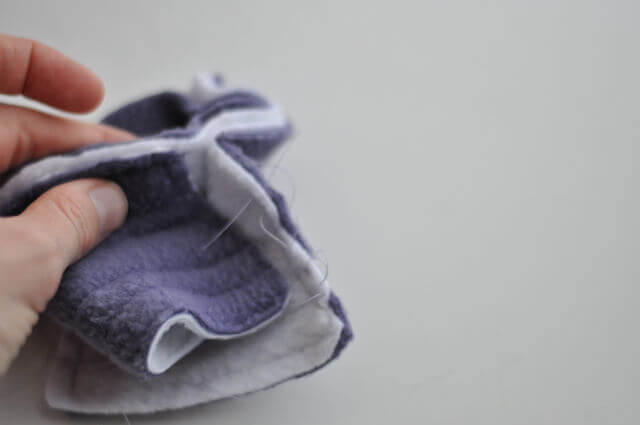 Pin in place.
 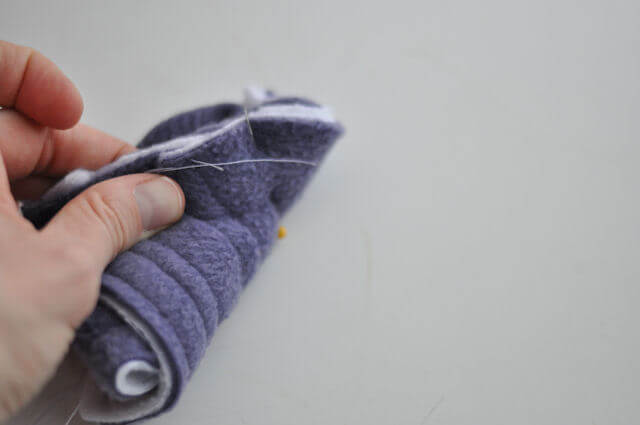 Sew around the FRONT piece, using the presser foot as the inseam guide. The bootie on the right shows the FRONT piece newly attached.
 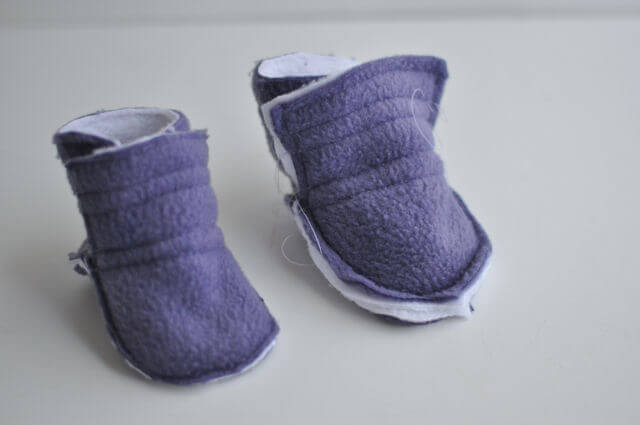 Trim down the FRONT piece and around the SOLE. The one on the left is trimmed down.
 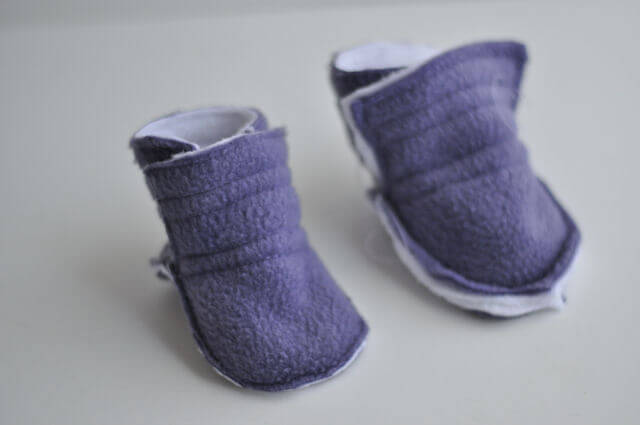 Now to the elastic. Peel back the FRONT and BACK pieces.
 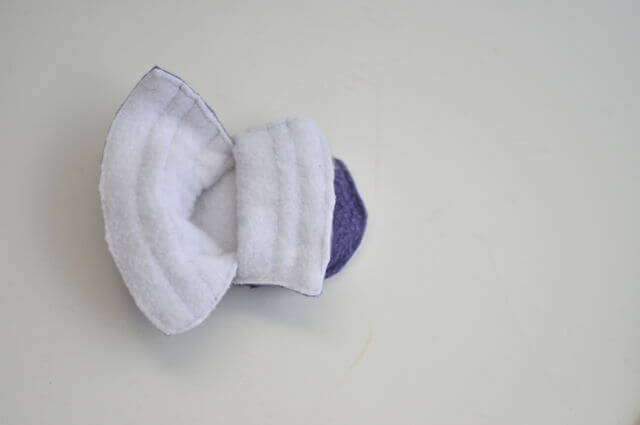 On the inside of the FRONT piece, cut two tiny openings in each channel, one on each side, about 3/8 inch in from the edge.
 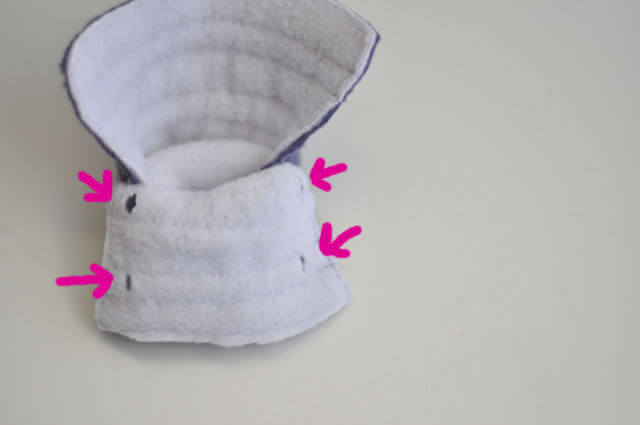 On the outside of the BACK piece, make another two openings per elastic channel, 1/2 inch from the edge. Obviously only one side is showing here. Make sure the other side looks the same.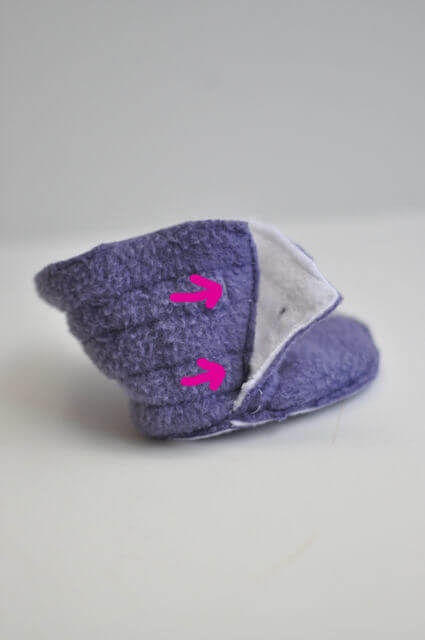
Thread the elastic through the elastic channels starting with the bottom channel, in the hole on the BACK piece.
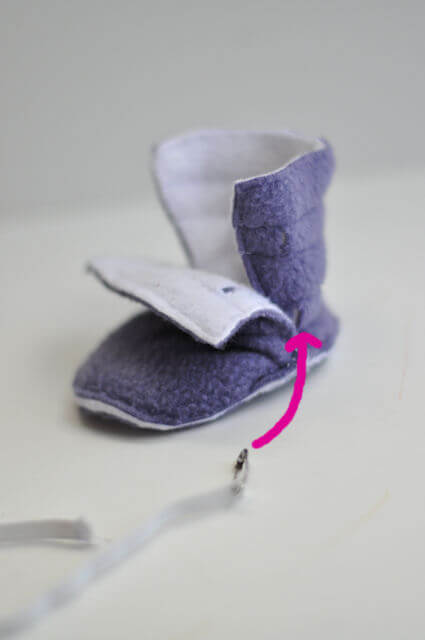
Continue threading it around the BACK and then through the FRONT piece, ending where it began.
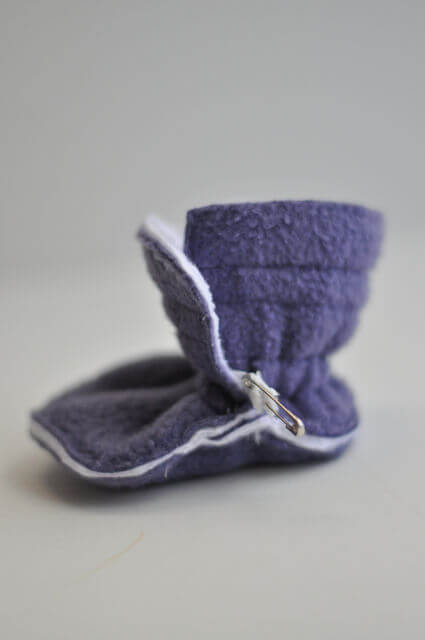
Repeat with the top channel.
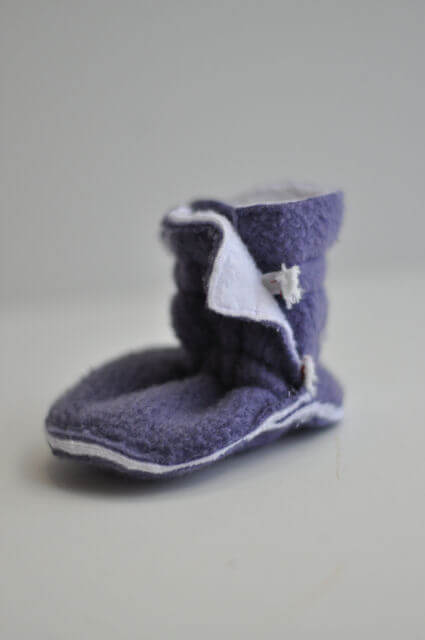
Sew together the elastic to fit your babe’s leg/ankle/cankle circumference. You will want the bottom elastic to be the tighter of the two to ensure the bootie stays in place. If it’s not right the first time, resew.
To complete the bootie, rotate the elastic so the ends are inside the channels. 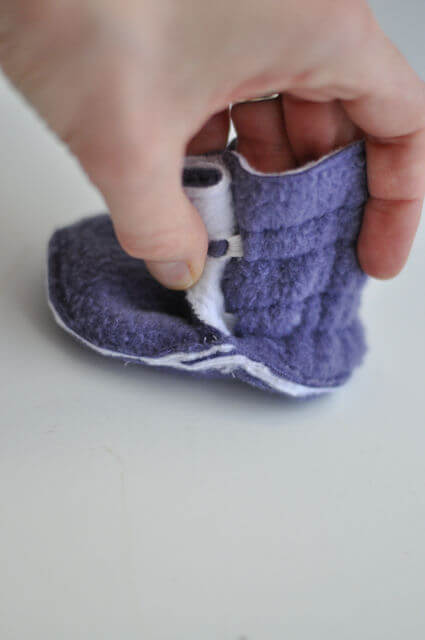
Then they are finished. One sweet pair of booties. 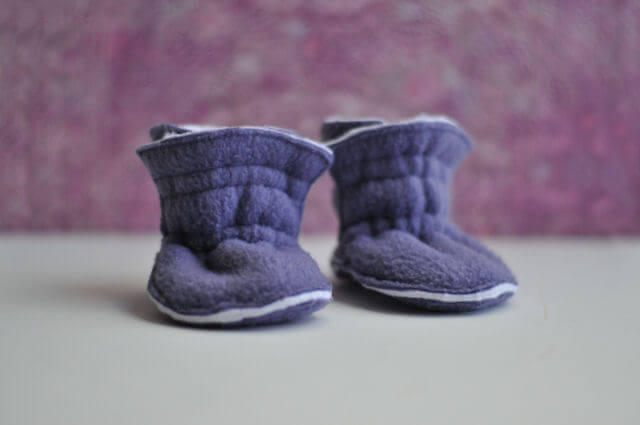
I don’t have a wee baby to try them on anymore but if you’re in the same boat, rest assured they make perfect baby doll booties as well.
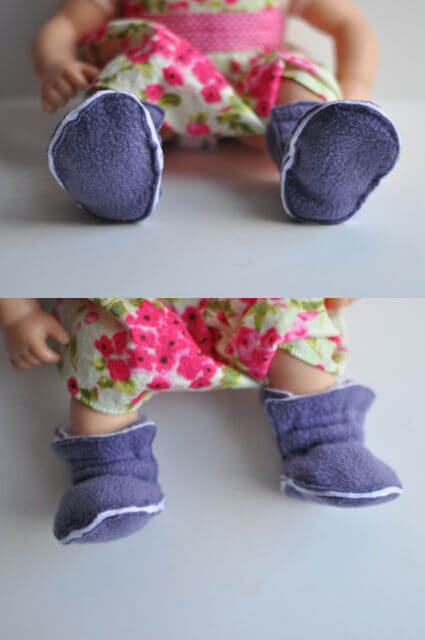
This is my Sweet J with his booties. 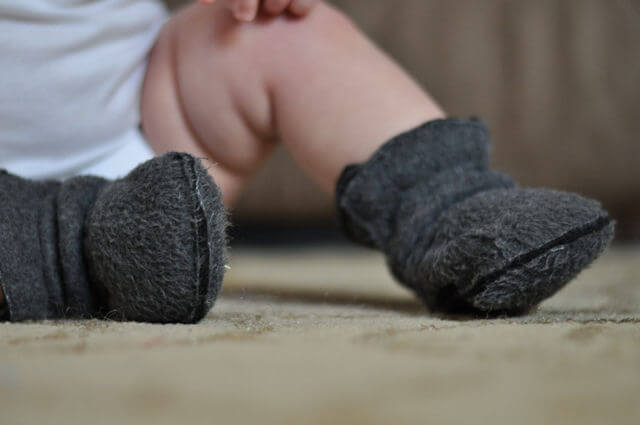 His have a bit of a ‘brushed’ look from speedily crawling everywhere. The best part is they stay on even then.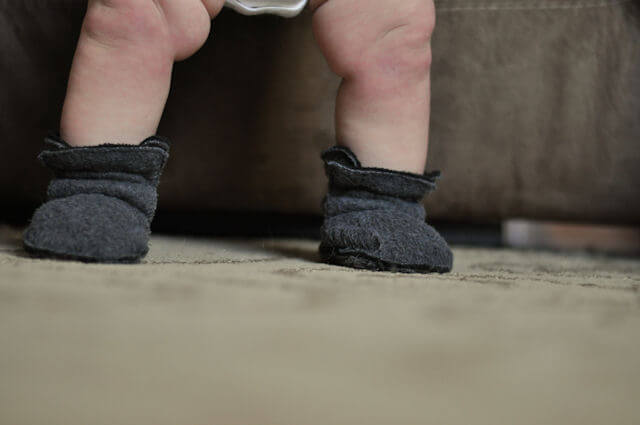
If you would like to make some booties for a sweet baby in your life, follow the picture link below for the pattern. The pattern will be available for free for the length of Delia’s series.
I look forward to seeing your new family member soon!

All these homemade baby items are killing me. So cute.
Adorable! They are too cute on those little feet!
Thanks you so much, I can’t wait to make these. What percentage should i print out the pattern for a newborn sized foot?
How fun and adorable! I feel so lucky we get this pattern for free! Thank you!
Thank you so much for the helpful instructions and photos. I am a newbie to sewing and would really like to make a few pair of these for my little guy. I am curious, at what stage of the sewing process would you sew the bias tape on and how would you go about it?? I have never worked with bias tape but would love to make some from corduroy and coordinating bias tape. Any ideas and suggestions
Awesome! And thanks for the free pattern!
great questions!
larissa – being that i don't have a newborn currently, i did a guestimation. the pattern as printed is what i used for the little purple ones that fit on my daughter's baby doll. of course, i'm sure there are baby feet even smaller so reduce it to fit just right. 🙂
the fullmers –
i'm actually working on the process with the bias tape.
I made these for my 3 1/2 month old and they were too small as written, si i am guessing it is a newborn to maybe 3 months. I will be attempting them agan as i love the style and think they will help with our similar cankle issues. They so simple to make!
Also had wondered at the possibility of turningnand topstitching pieces to be able to use wovens like the cord insteasld of bias tape? May be playing with that as well…
I printed at 115% and they now fit my four month old and should for a bit… now to play around and get them to fit my older son's 18 mo size feet! they do stay on great! even with all that baby kicking, they didn't come off even once!
I needed to print this at 175% to get about the right size sole for my 10 month old, including seam allowance. Do I need to scale down the front and back peices though? They seem rather large, but maybe it will all come together in the end. Thanks for a really cute pattern!
Hey Anonymous 🙂
You have a good question and sadly, I'm not sure of an answer. I think you should be able to get an idea of how it will all go together when the pieces are cut and can adjust them accordingly. I would love to hear how it works out! Thanks for the note. Good luck!
I am not seeing the link to the pattern…
Hello !
These boots are very so cute !
I’d like to make one for my future baby (in june) but when click the link to download, it’s impossible to download…. I’ve error message…
Help me !! I want absolutely these boots ! hihi
thanks a lot for free pattern !
Mary
So sorry about that! I would try Amy’s post on her site (she guest posted for me) and see if you have better luck with her download link?
http://www.thisheartofmineblog.com/2012/02/20/baby-booties/
Ohhhhhh it’s perfect !!!
thanks a lot Delia !!
Cute booties. wish i could get the pattern. tried for an hour.
I love these! The link for the pattern does not work though 🙁
the link website doesn’t work…please share the pattern thanks a bunch x 🙂
Sorry about that Pam. Try going to Amy’s site: http://www.thisheartofmineblog.com/2012/02/20/baby-booties/
I hope that helps!