
We’ve gotten to the point in my Crochet Basics series where gauge swatches are starting to matter.
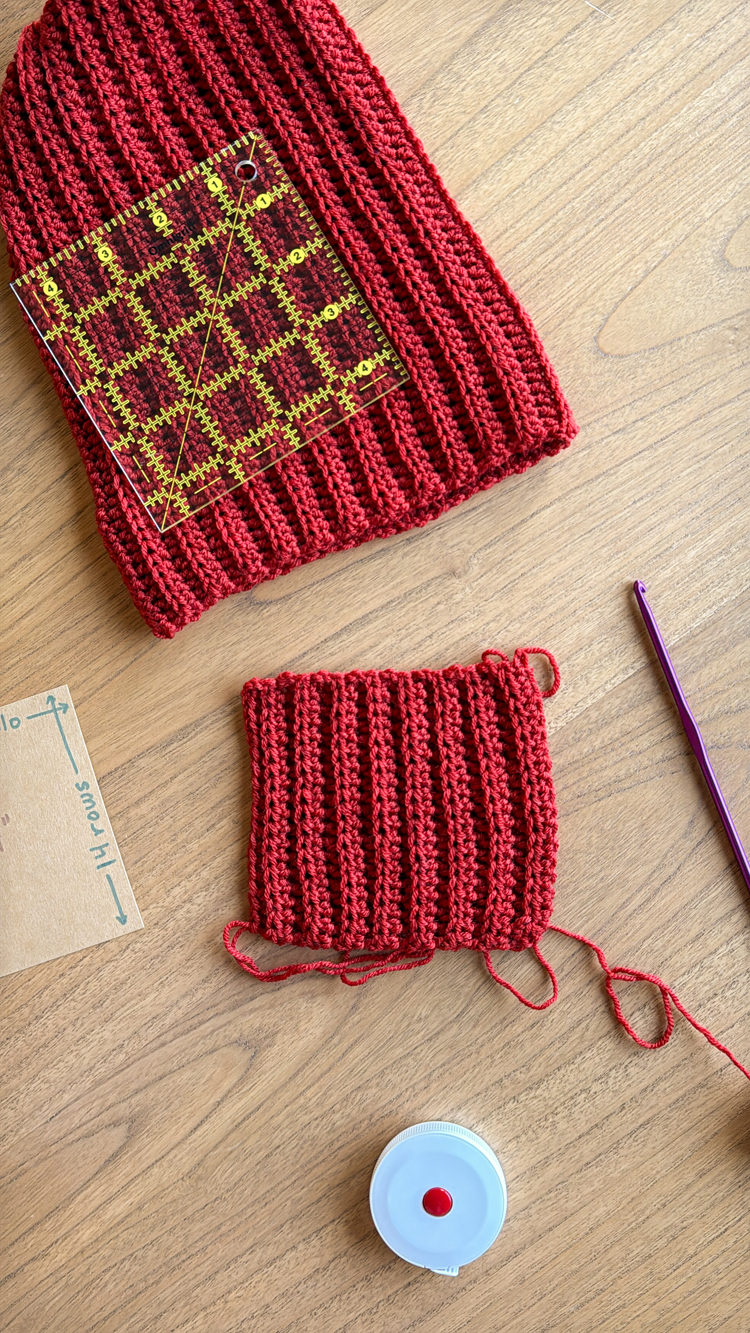
If you haven’t been following along, I created a beginner focused crochet series about seven years ago called “Crochet Basics” where I teach a basic stitch and then share a project or two that helps you put into practice what you just learned. This year, I decided to refresh the series for TikTok, and we got to our first project where size matters, this Half Double Crochet Beanie.
Which…. sort of answers the second question of do you need one? But I’m getting ahead of myself.
What is gauge?
First, gauge is how tightly or loosely you crochet, or how tight or loose a pattern is designed to be. This is measured by how many stitches and rows fit within a certain square measurement, usually 4 inches by 4 inches (but it can also be 2 x2 or 3 x3, etc).
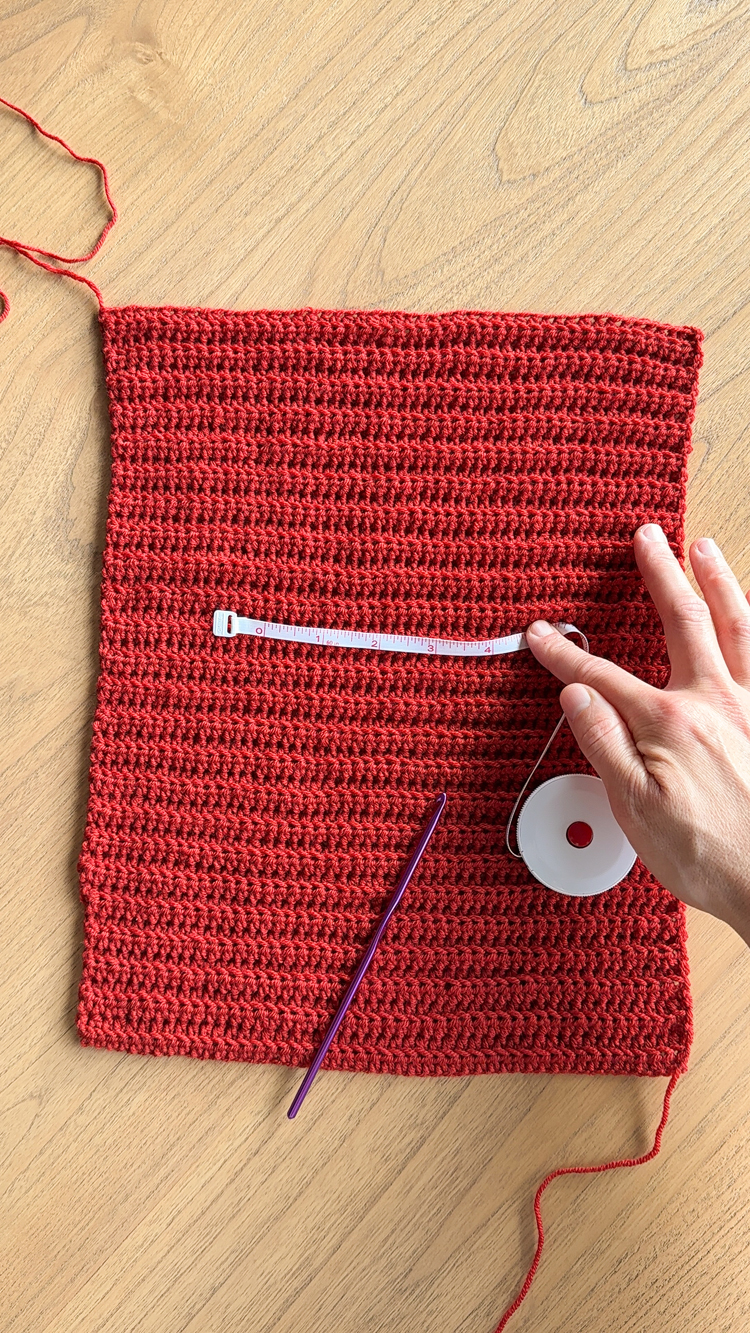
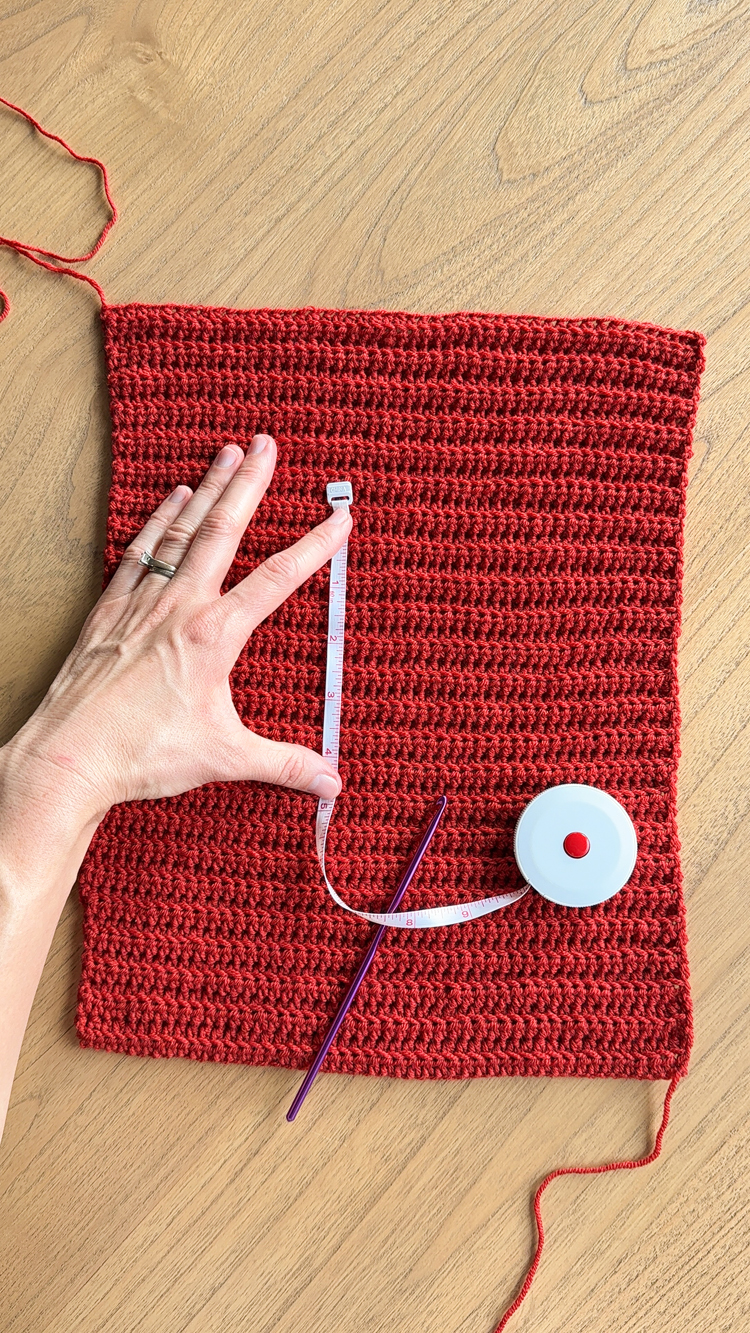
If you want your project to match what the pattern designer intended, then your gauge needs to match the gauge listed in the pattern.
By the way, the video below also covers this material AND it shows you how to create a gauge swatch. You can also follow along on TikTok.
What is a gauge swatch?
A gauge swatch is a small sampling of stitches you can measure it to see if it matches the pattern, before you make the actual project.
It doesn’t make a lot of sense to make the whole beanie or project, measure the gauge, and then find out that it doesn’t match, which is why making a gauge swatch beforehand you start can save you time and regret.
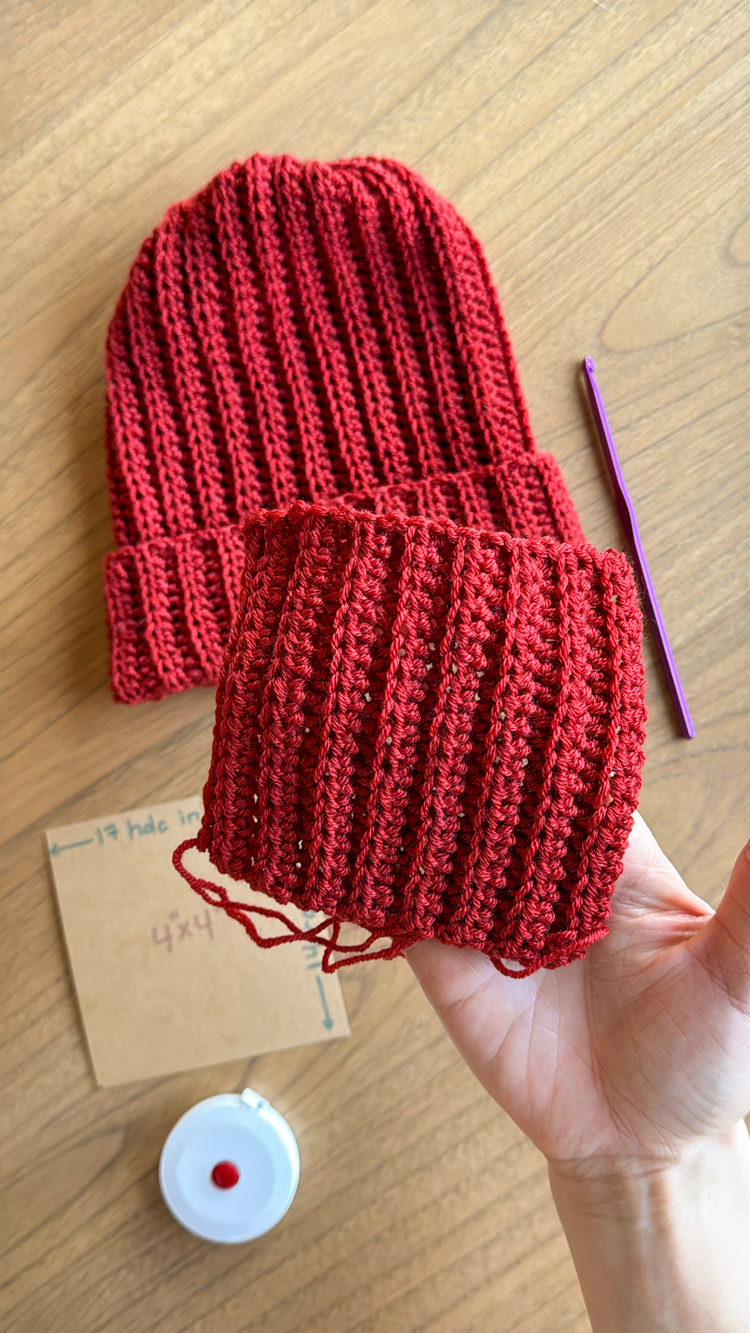
How to make a gauge swatch.
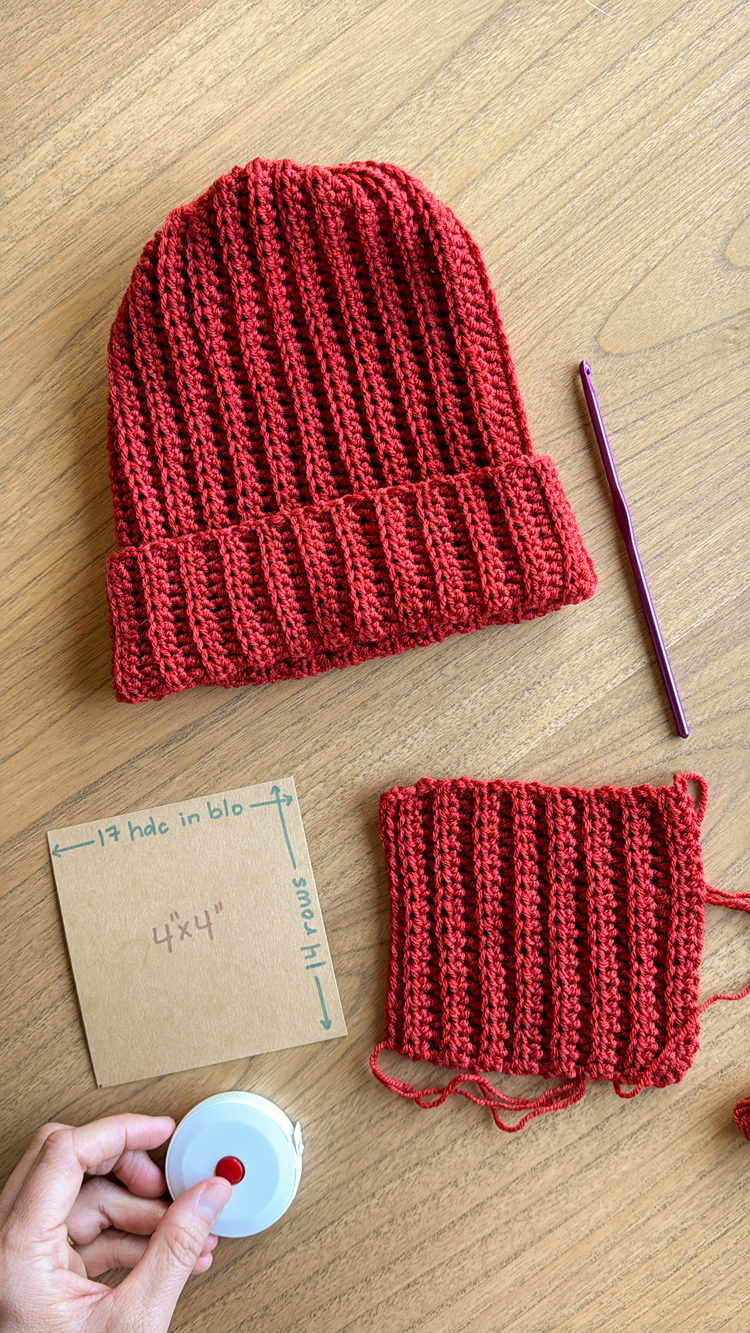
Gauge is often listed as shown below. This is the gauge for my Half Double Crochet Beanie as shown in these photos.
4 inches x 4 inches = 17 hdc in blo x 14 rows
Please note. This is what the abbreviations mean:
- hdc = half double crochet
- blo = back loops only
As you can see, it lists 17 stitches by 14 rows. You want to work a swatch slightly larger than this because the sides can sometimes curl in or under and that can skew the measurements.
To get an accurate measurement, I’d recommend making a swatch this way for this beanie:
- Chain 20. Turn and hdc into the third chain from the hook. Hdc in each chain.
- Turn, ch 2, and hdc in blo for the rest of the row. Please note: You want to make sure you work in back loops only because this is what is used in the pattern. The gauge is different when a hdc is worked in the back loops vs both loops. Use whichever stitches the pattern uses.
- Work 16 -17 rows of hdc in blo.
- Stretch out the stitches a little and then press on them to help the stitches bounce back. Remember, that you’re creating a stretchy material so you want to be careful that your swatch is not too stretched out, and not too compressed. Giving it a quick stretch and press can help your stitches relax. The video above demonstrates how to do this as well.
Once you have your completed swatch, measure it with a ruler or measuring tape. Measure the number of stitches one way and the number of rows the other way.
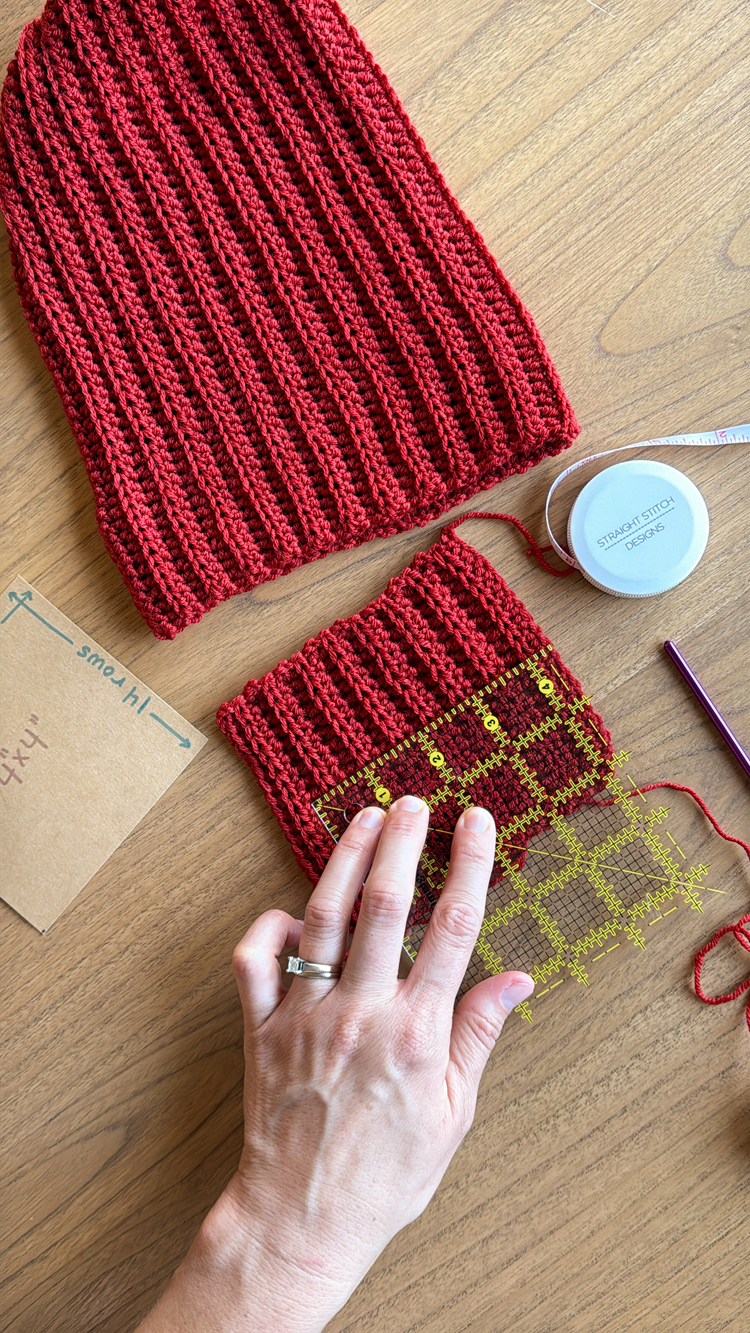
NOTE: Once you’re done, don’t tie anything off. You want to be able to pull out your stitches and reuse the yarn for your project.
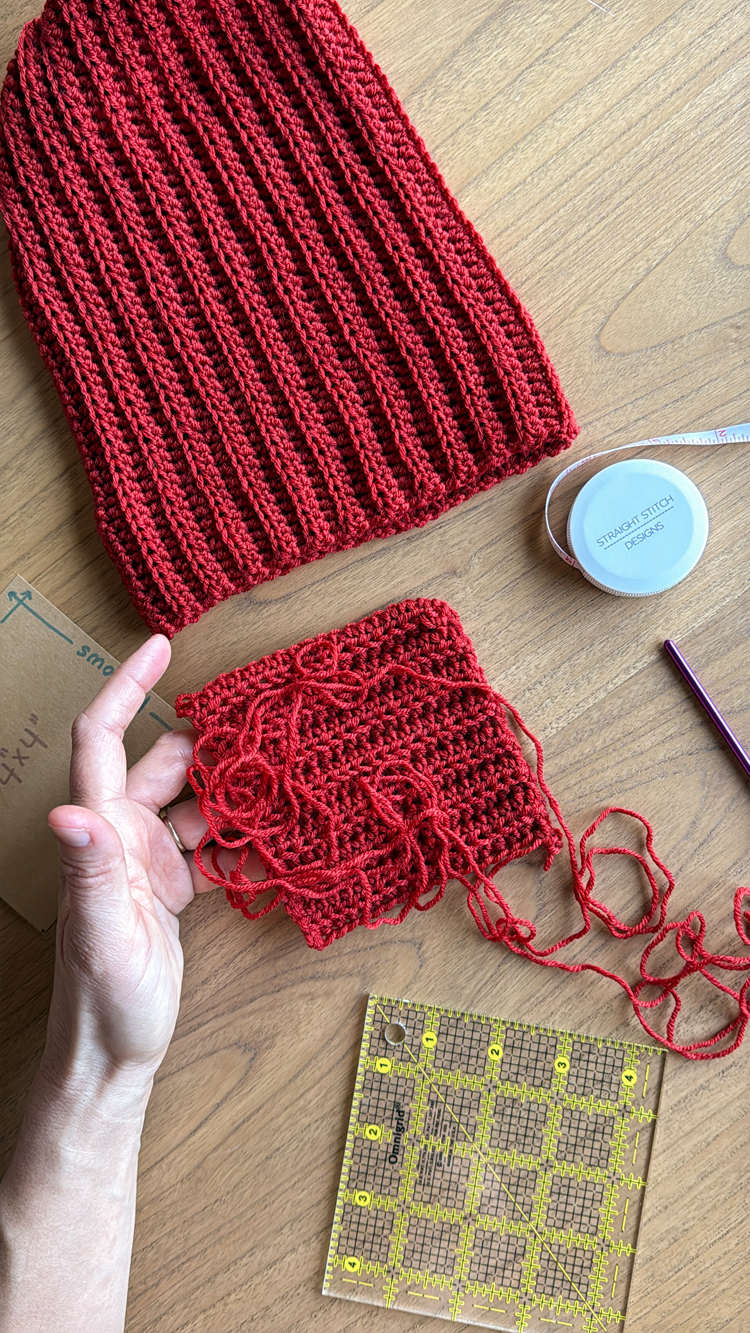
What do you do if your swatch doesn’t match the gauge in the pattern?
TOO TIGHT?
If you have more stitches and/or rows in your swatch than the gauge, then you’ve crocheted too tightly. This could be due to your yarn or your tension. Some yarns, even with identical sizing, can work up slightly differently.
If it’s your tension you can try to relax your stitches or you can go up a hook size. A larger hook will make your stitches larger.
TOO LOOSE?
If you have too few stitches and/or rows compared to the gauge, then you’ve crocheted too loosely. Again, check to see that the yarn isn’t thicker or fuzzier than the pattern calls for. If it is, or if you tend to crochet loosely, you can pull your tension tighter or go down a hook size. A smaller hook will encourage your stitches to be smaller.
NOTE: Double check that your stitches and rows are relaxed and flat. Your gauge could be way off simply because the stitches are bunched or stretched more than they should be. If gauge is crucial to your project, you may even want to block your swatch to ensure you get an accurate measurement.
Do you always need a gauge swatch?
The short answer is, no. This scrunchie pattern or this ball project don’t really need a swatch because any size discrepancies won’t make or break the success of the project.
You need a gauge swatch when the size of it matters, like with clothing. For example, I would definitely make one for this Rectangle Cardigan. Even then, you *could* skip it and hope for the best, but if it’s a big project, it’s worth just working one up. A gauge swatch takes a little extra time at the beginning, but it can save you a lot of regret later.
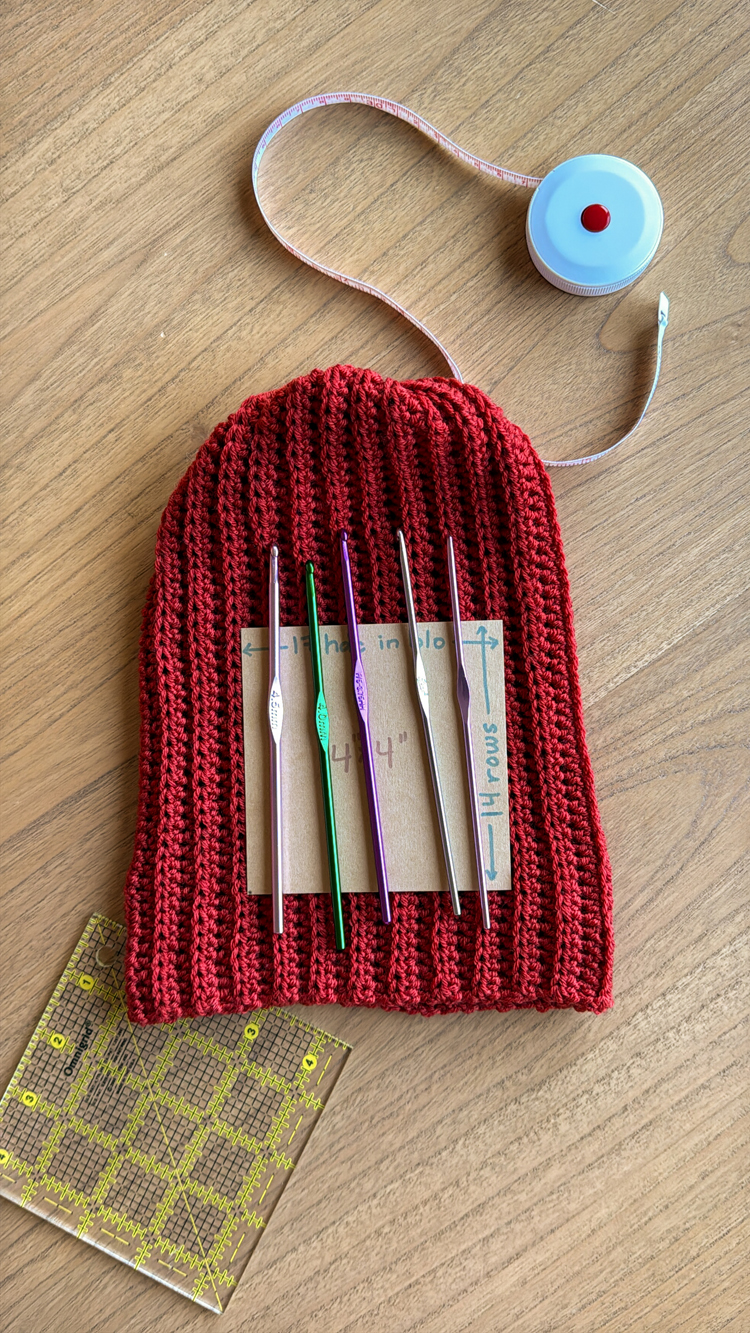
Alternatively, if you don’t own the right hook size recommended for a project, you can work up a swatch with a hook size that is close to see if you can get away with using a different size hook.
This is especially helpful with using hooks from outside the U.S. It has come to my attention, that sizes like 3.25 mm or 3.75 mm are unique to U.S. brand hooks. If you only have access to a 3.50 or a 4.00 mm hook when the pattern calls for 3.75 mm. A swatch can help you choose the right alternative hook.
Let me know if you have any questions in the comments.
Leave a Reply